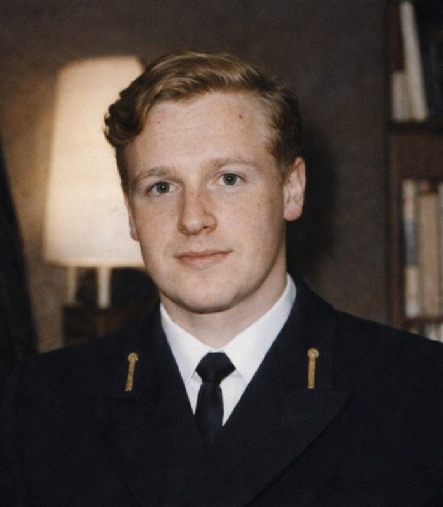
I served as a Cadet and Deck Officer with B&C from 1968 to 1980.
I recently explored the B&C website and found it to be an outstanding resource. It was especially rewarding to come across the names and stories of many former shipmates I sailed with.
I particularly enjoyed reading the sections on cruising aboard the Reina del Mar.
To the Breaker’s Yard on Reina Del Mar
Career Summary
Subject: Reina Del Mar – Cape Town and Memories of the Final Voyage
Date: 19 January 2020
Thank you very much for publishing the photograph of Reina Del Mar in Cape Town during her final voyage to the breakers. It brought back many memories of long ocean passages!
I've attached a document that outlines some of the key details from the voyage. As you can imagine, much more happened—particularly around discussions regarding bunkers—but I’ve chosen to stick to the facts recorded in my Noon position logs. After 45 years, I felt it best not to include anything that might now be considered hearsay.
There were, of course, a few lighthearted moments that I decided not to include on the public webpage, as they might be misinterpreted. One such memory involves an enthusiastic engineer who, as ‘tankeritus’ began to set in, offered to entertain us with his piano skills after dinner. This required us to lug an upright piano from a public room on the main deck up several flights of stairs to the Officers' bar on the boat deck. Unfortunately, his musical talents turned out to be of the “don’t call us, we’ll call you” variety.
Final Voyage of Reina Del Mar
In late April 1975, I had just completed the First Mate’s Course at Glasgow Nautical College when I was sent to Southampton to assist with the laid-up Reina Del Mar, moored in the Old Docks and awaiting her fate. I was joined by fellow Second Officer Chris Parkinson, and we were accommodated in a nearby guest house. Several Chief Officers came and went during this period—starting with Bob Dobie, followed by Harry Edwards, and finally Alan Cruickshank.
By late May, we received confirmation that Reina Del Mar had been sold for scrap to shipbreakers in Taiwan. Chris, Alan, and I were asked to join the delivery crew. My only worry was whether I'd be back in time for my wedding on August 29th. The office reassured me that the Suez Canal—closed since 1966—was expected to reopen soon, promising we’d be home well before then.
Captain Byrne and the rest of the crew joined us, bringing our number to about 18. We were instructed to bring only one small carry-on for the return flight. We departed Southampton on the evening of May 28th, proceeding at an economical 10.5 knots. By May 31st, we’d passed Cape Finisterre, staying west of Gibraltar in case we were redirected to Port Said should the canal reopen. Fuel conservation was a priority; while we were bunkered for Suez, we didn’t have enough fuel to reach Cape Town otherwise.
Our June 3rd noon position was 29°56’N, 13°54’W, just north of Las Palmas. Speed had held steady around 10.7 knots. By June 4th, we’d passed south of Las Palmas (26°52’N, 15°30’W), reducing speed to around 9.5 knots, presumably to save fuel.
Eventually, we were advised bunkers had been arranged in Dakar. Although the Suez Canal officially reopened on June 5th, the decision had likely been made by then to continue around the Cape, as turning back would’ve been more costly. We arrived off Dakar on the evening of June 7th, having traveled 2,376 miles from Southampton at an average of 9.98 knots. We bunkered quickly and were underway again by noon the next day.
Crossing the equator and into the southeast trades, our speed dropped slightly. We arrived off Cape Town on the morning of June 24th and berthed immediately, covering 3,665 miles from Dakar at an average speed of 9.6 knots—27 days since Southampton. A local Cape Times article captured the ship's faded glory well, and a photo showed her with her characteristic 1° port list and weathered lilac hull.
We sailed again on June 25th, now bound for Taiwan. Fuel economy remained a concern, and routing decisions across the Indian Ocean were carefully considered. My notes indicate we left from Port Elizabeth, passed north of Réunion and Mauritius, continued north of Chagos, and entered the Malacca Strait. Our daily average varied—initially 7.75 knots in the Agulhas Current, later rising to between 7.8 and 9.6 knots.
We arrived at the Singapore anchorage on the morning of July 23rd after 28 days and 5,713 miles at an average speed of 8.69 knots. After refueling, our departure was delayed due to an expired Load Line Certificate. A Lloyd’s surveyor conducted a hasty but thorough inspection, confirming all systems were operational. We left late on July 23rd and by noon on the 24th, we’d made 156 miles toward Kaohsiung at about 10 knots.
Fortunately, the China Sea gave us fair weather. The ship had become very tender by this stage, responding sluggishly to helm input, exhibiting that lazy roll characteristic of a minimal GM. We arrived off Kaohsiung mid-afternoon on July 30th, completing the 1,612-mile leg from Singapore at an average speed of 10.58 knots.
We were eventually maneuvered into a vast basin surrounded by other ships awaiting scrapping, like locomotives around a turntable. As we moved into position, we nudged an old BP tanker aside. Nearby, ships were actively being dismantled, winched stern-first up a ramp. By then, only the forecastle of British India’s Nevasa remained.
According to my discharge book, we were signed off on August 2nd, though I recall already being in a hotel awaiting flights. A typhoon swept through the area during our stay—strong winds and heavy rain—meaning we had arrived just in time.
Our journey home was long: via Taipei, Hong Kong, overnight in Bangkok, then Tehran, Frankfurt, and finally Heathrow on August 5th. Three of us headed for Glasgow but missed the last domestic flight, so we took the night sleeper from Euston, complete with nightcap bar, arriving in Glasgow Central early on August 6th.
I made it home with three weeks to spare before the wedding. Forty-five years later, we’re enjoying retirement. Mary even had some sea time of her own, sailing to South and East Africa and Mauritius aboard Clan Graham, Winchester Castle, and Table Bay.
Reina Del Mar - A Slow Boat to China
Service Record |
From
|
To
|
|
Pre-Sea Training
Warsash
|
9/1968
|
4/1969
|
|
Clan Sutherland
Cadet
|
5/1969
|
1/1970
|
|
Clan Ross
Cadet
|
2/1970
|
3/1970
|
|
Elizabeth Bowater
Cadet
|
4/1970
|
1/1971
|
|
MCR Course
Warsash
|
2/1971
|
7/1971
|
|
Edinburgh Castle
Cadet
|
8/1971
|
12/1971
|
|
Clan MacIndoe
Uncert 3rd Officer
|
1/1972
|
2/1972
|
|
Clan Ross
Uncert 3rd Officer
|
2/1972
|
2/1972
|
|
2nd Mate’s Certificate
Warsash
|
3/1972
|
7/1972
|
|
Left and rejoined
Company
|
|
|
|
Reina del Mar
3rd Officer
|
2/1973
|
3/1973
|
|
Argyllshire
3rd Officer
|
3/1973
|
6/1973
|
|
Clan Ranald
3rd Officer
|
8/1973
|
9/1973
|
|
Clan MacLaren
2nd Officer
|
9/1973
|
12/1973
|
|
Clan MacLeod
2nd Officer
|
2/1974
|
6/1974
|
|
Clan Menzies
2nd Officer
|
7/1974
|
8/1974
|
|
1st Mate’s Certificate
Glasgow
|
9/1974
|
3/1975
|
|
Reina Del Mar
2nd Officer
|
4/1975
|
8/1975
|
|
Clan Graham
2nd Officer
|
11/1975
|
5/1976
|
|
Causeway
2nd Officer
|
5/1976
|
11/1976
|
|
Winchester Castle
2nd & Chief Officer
|
3/1977
|
7/1977
|
|
Table Bay
Extra 2nd & 2nd Officer
|
9/1977
|
12/1978
|
|
Master’s Certificate
Glasgow
|
1/1979
|
7/1979
|
|
Clan MacGregor
2nd Officer
|
12/1979
|
1/1980
|
|
Everett F Wells
2nd Officer
|
2/1980
|
4/1980
|
|
Voluntary
Redundancy
|
1980
|
|

Maritime Career Summary
Sea-Going Career
Clan Sutherland
Cadet Training Ship (Training Officer: Derry Sinclair)
- Voyage: UK – East & South Africa – Mediterranean – South Africa – Mediterranean.
Clan Ross
- Voyage: South Shields to Cape Town, returning via Sheerness.
- Later served in a port relief role.
Elizabeth Bowater
Voyages: UK to USA East Coast and return.
- 14 voyages from Corner Brook and one from Liverpool, Nova Scotia to the US Great Lakes or East/Gulf Coasts.
- One voyage to Spain, returned to the UK from Newfoundland to Ridham carrying logs.
Edinburgh Castle
- Three mail voyages between the UK and South Africa.
Clan MacIndoe
London Bridge – Panamax Bulker (Owners: CT Bowring)
- Voyage: North Spain – USA – Panama – Japan – Australia – USA Gulf – Rotterdam.
- On 16 September 1972, passed close to the centre of Typhoon ‘Helen’ south of Japan en route to Queensland. The vessel sustained significant damage, including flooding of the duct keel and access tunnels.
Reina Del Mar
- Port relief duties.
- Later served standby in Southampton before a scrapping voyage to Kaohsiung, Taiwan via Dakar, Cape Town, and Singapore.
– 18 crew onboard, average speed 9–10 knots.
Argyllshire
- Two voyages: Europe/UK to South Africa and Mozambique.
Clan Ranald
Clan MacLaren
- Voyage: UK to East Africa and return.
Clan MacLeod
- Voyage: Mediterranean – South Africa – Mozambique – Northern Europe/UK.
Clan Menzies
- Coastal voyage in the Mediterranean.
Clan Graham
- Voyage: UK/European coast – Ascension/St Helena – South Africa – Mauritius – Mozambique – South Africa – South Wales/UK West Coast.
- Loaded a spare propeller for King Richard in Manchester, then transferred it directly to the vessel at the 'Tail of the Bank', Clyde, using a jumbo derrick.
Causeway
- Maiden voyage: Copenhagen – Canada – Liverpool – Mobile – Durban – Richards Bay – Mobile.
Winchester Castle
- Voyage: Hull – Mozambique – South Africa – Cardiff/Bremen – South Africa – Antwerp.
- Ran aground overnight in approaches to Cardiff.
- Promoted to Chief Officer from Bremen to Antwerp following the departure of the original C/O.
Table Bay
- Standby at A.G. Weser yard in Bremen for one month.
- Sea Trials and first three voyages between Europe and South Africa.
- Subsequently completed four more Europe/UK – South Africa voyages.
Clan MacGregor
Everett F. Wells
- Final voyage under CI Management: Persian Gulf – Curaçao – Lisbon.
Shore-Based Career
1980
- Voluntarily left sea-going role.
1980–1981 – Sealink UK, Dover
- Second Officer.
- Completed 165 crossings of the Dover Strait.
- Resigned to pursue a shore-based career.
1981–1988 – Bryden Harper & Co. Ltd, London
- Marine & Cargo Surveyor in the UK and overseas.
1988–2011 – Glasgow College of Nautical Studies
- Roles: Lecturer in Nautical Subjects → Head of Maritime Studies → Depute Principal.
- Qualifications:
- Teaching qualifications (Jordanhill School of Education & Open University)
- MSc Naval Architecture with Distinction (Strathclyde University)
- Key Achievements:
- From 1993, increased engagement with international students and commercial training.
- 1995: Led UK MCA-funded project on Lifeboat Release Mechanisms following shipboard incidents.
- Awarded Fellowship of the Nautical Institute (FNI).
- From 2007: Played a leading role in establishing CFMA, a Nautical College in Angola.
2011–2012 – City of Glasgow College
- Appointed Vice Principal (International and Commercial Business) following the merger of Glasgow’s colleges.
- Retired in June 2012.
2012–Present – Speight Marine Ltd
- Founder of a maritime educational consultancy.
- Services provided primarily to Stena and Sonangol Shipping (Angola), among other clients.
Career Summary
One of the most memorable experiences of my career was the 1975 scrapping voyage of the Reina del Mar from Southampton to Kaohsiung, traveling at just 10 knots via Dakar, Cape Town, and Singapore. Alongside Captain Byrne, Alan Cruikshank, and Chris Parkinson, I was part of a crew of fewer than 20—a truly epic journey.
From 1972 onward, I kept a detailed record of every noon position, and that particular voyage remains a fascinating chapter in those logs.
I also had the privilege of sailing on the maiden voyages of both the Causeway and the Table Bay..

By 0400 hours the next morning, when I joined the two engineers in the bar for our usual “left-out” breakfast, the piano had mysteriously vanished. Despite a thorough search of the ship by our would-be pianist, it was never seen again. We could only assume that Reina Del Mar arrived in Taiwan minus one upright piano—now possibly resting somewhere on the bottom of the Atlantic!
As an amusing aside, the crew—completely unaware of the piano episode—were on continuous fire patrols with Llewellyn clocks. Some grew uneasy, claiming encounters with “passengers past” on E deck. One even reported seeing a mad engineer wandering the ship searching for a missing piano!
It truly was a voyage and a half.